Fear and Shame Marketing
Fear and Shame Marketing
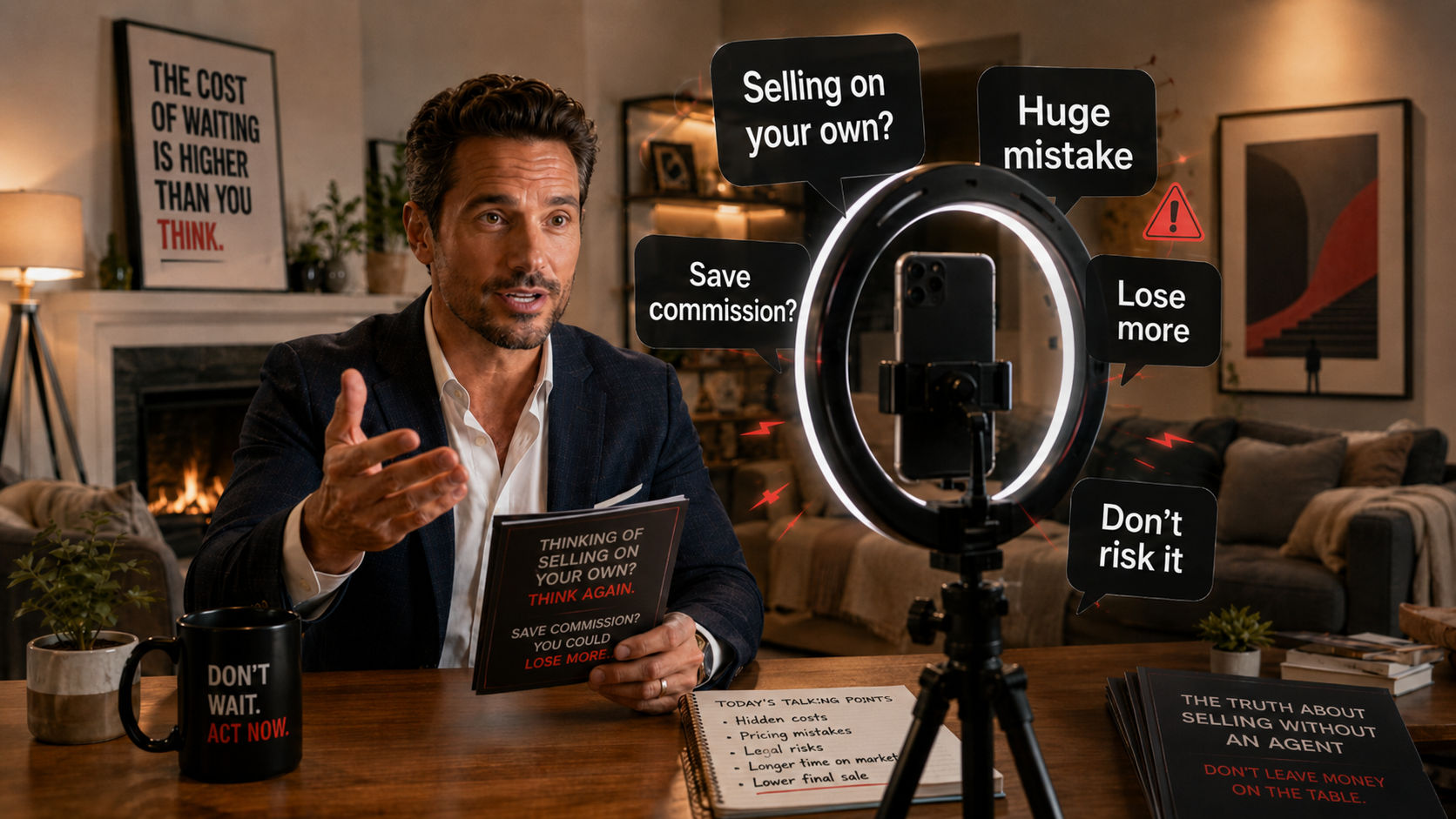
When the message is partly true, but the method reveals the problem.
Estimated read time: 9 minutes
A Realtor showed up in my feed recently with a post about private sellers and commission. The basic message was simple: the fastest way to lose $100,000 selling your home is trying to save $30,000 in commission.
The post went on to explain that selling a home is not just putting it on MLS. It is pricing, negotiation, managing conditions, dealing with financing issues, inspections, appraisals, lawyers, timelines, emotions, and all the moving parts that happen after the listing goes live. Here is the thing. The message is not entirely wrong.
A good Realtor can absolutely protect a seller from making expensive mistakes. Pricing matters. Strategy matters. Negotiation matters. Emotional distance matters. Experience matters. A deal can start to unravel quickly when the wrong decision is made at the wrong time. So I am not writing this because I disagree with the idea that professional representation has value. I have spent almost three decades in this business. I believe good representation matters.
What bothers me is the way our profession sometimes tries to prove that value. Too often, the public is not educated. They are warned. Mocked. Shamed. Scared. Treated as though asking a fair question about commission means they are cheap, naive, or about to get what they deserve. That is where I think the values are misplaced.
“
The message is not entirely wrong. What bothers me is the way our profession sometimes tries to prove that value.
Wanting to Save Money Is Not Foolish
There is something deeply reasonable about a seller asking what they are getting for the commission they are being asked to pay. Commission is expensive. There is no point pretending otherwise. In higher-priced markets, the numbers are large. A seller may be looking at tens of thousands of dollars in fees. Of course they are going to ask whether there is another option. Most people work very hard for that kind of money.
That question should not offend Realtors. It should challenge us. When someone asks, “What do you actually do for that fee?” the answer should not be fear. It should not be sarcasm. It should not be a punchline about people cutting their own hair or watching YouTube videos. The answer should be substance.
Where does your judgment change the outcome? Where does your process protect the seller? Where does your experience reduce risk? Where do you help a client avoid a decision that may feel right emotionally but cost them financially? That is the real conversation.
Also Worth Reading
If this article has you thinking more carefully about Realtor value and ethics, there is another related question worth asking: when Realtors use AI, is it improving the service they provide, or simply creating more polished marketing designed to fool the public?
Related: Ai isn't the problem
I Know This Because I Have Been There Myself
I understand this part more than most people might think. Years ago, I listed one of my own homes. I was already an experienced Realtor. I knew the market. I knew how pricing worked. I knew what we tell sellers all the time about being objective. And it was still difficult.
I knew every dollar that had gone into that house. I knew the repairs, the upgrades, the work, and the things I had improved that no buyer would ever fully understand. I knew the care that went into it because it was not just a property to me. It was my home. That influenced me.
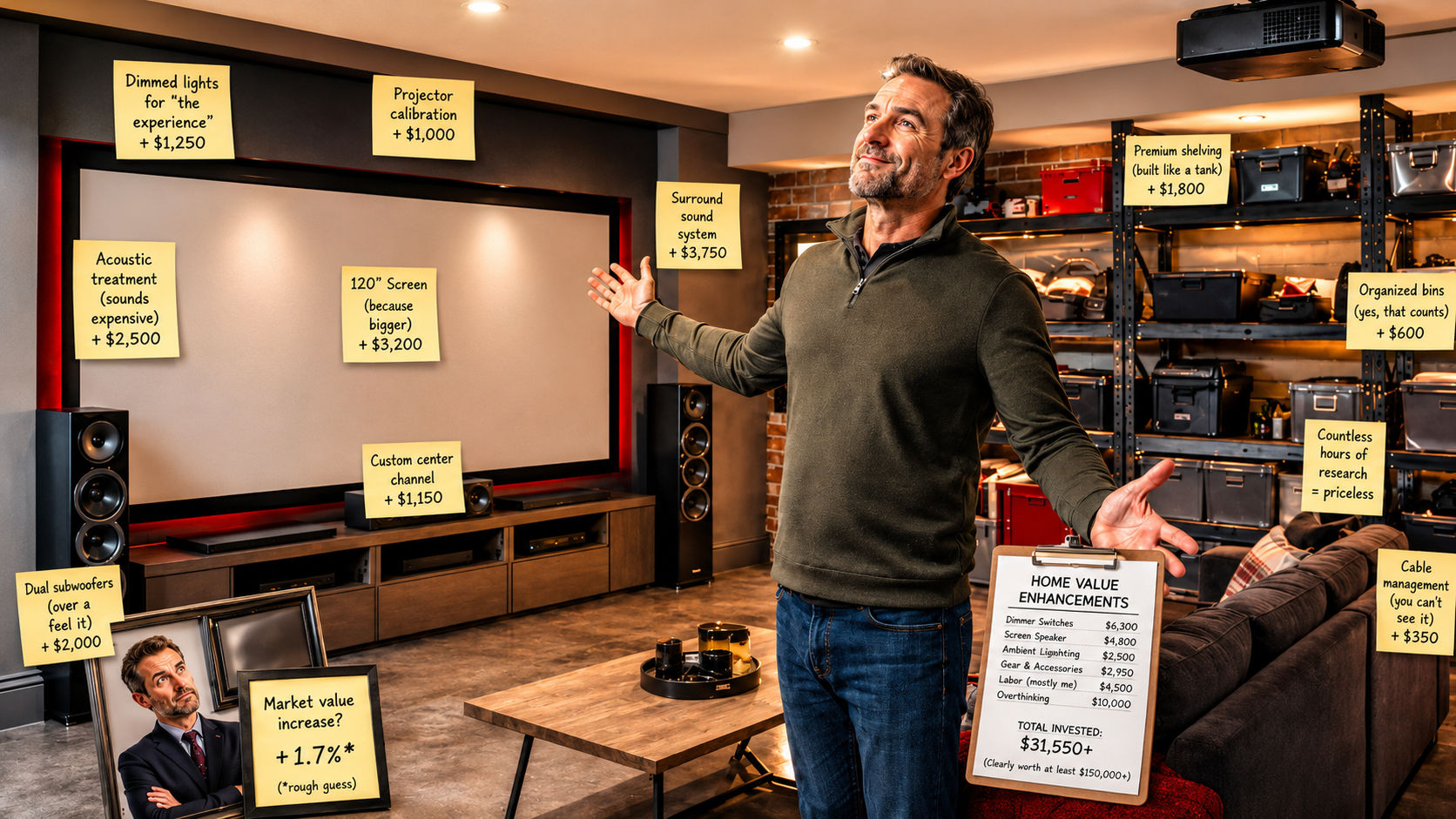
Some of what I valued mattered to the market. Some of it mattered a little. And some of it probably mattered far more to me than it did to a buyer. I loved my 110-inch HDTV projection setup and the 7.1 basement sound system. I thought my industrially shelved storage room was incredible. To me, those things added real value because I knew how useful they were and how much thought went into them. But the market does not always care about the things we care about in the same way.
That is a hard truth for any seller. It was even hard for me, and I do this for a living. There is a reason seasoned agents often say you should not list your own home. Get a colleague who is not afraid to tell you the truth. Someone objective. Someone who can separate what the home means to you from what the market is likely to pay for it. Pay them a fee for their unbiased work, because that objectivity has value.
That does not mean sellers are foolish. It means sellers are human. And when you are selling something that carries memories, money, work, pride, and personal meaning, it is very easy for value and emotion to become tangled together.
“
That does not mean sellers are foolish. It means sellers are human. And when memory, money, pride, and personal meaning are involved, value and emotion can easily become tangled together.
The Problem Is Not Defending Realtor Value
I do not have a problem with Realtors explaining why private selling can be risky. It can be. A seller may misprice the home. They may overreact to feedback. They may accept the wrong buyer. They may mishandle conditions. They may fail to create enough exposure. They may negotiate from emotion instead of strategy. Those are real risks.
But the better argument for hiring a Realtor is not that the public is foolish. It is that selling a home is one of the few moments in life where money, emotion, timing, legal risk, negotiation, and uncertainty all collide at once. Most people do not sell homes often. A good Realtor lives in that pressure regularly.
That experience should create calm. It should create clarity. It should help people make better decisions. It should not be used to talk down to them.
Not Every Realtor Protects You
There is another issue that gets skipped when these posts are too simplistic. The argument is often presented as though there are only two choices: sell privately and take a huge risk, or hire a Realtor and be protected. But that is not automatically true.
Hiring a Realtor does not guarantee strong representation. You can hire a full-commission agent and still get weak advice. You can hire someone with awards and still get poor judgment. You can hire someone with a large social media presence and still feel like you were moved through a system.
That is why the commission conversation should not simply be about whether you pay or save. It should be about what kind of representation you are actually getting. The value is not in the title “Realtor” by itself. The value is in the judgment, process, and standards behind the person you hire. “
The value is not in the title “Realtor” by itself. The value is in the judgment behind the person you hire.
Fear Is Not the Same as Trust
This is where fear and shame marketing bothers me. It may get attention. It may create engagement. It may even make a valid point. But it also reveals something. When the message is built around making the public feel foolish, it becomes less about service and more about protecting the profession’s own insecurity.
That is not how trust is built. Trust is built when someone feels respected enough to ask hard questions. Trust is built when the answer is thoughtful, not defensive. Trust is built when a professional can say, “Yes, commission is a real cost. Now let’s talk honestly about what risk looks like, where money is won or lost, and what proper representation should actually do for you.”
That is a better conversation. It is also a more honest one.
Where the Money Is Actually Won or Lost
In real estate, money is not only won or lost at the negotiation table. A lot of the value happens before the public ever sees the result. It may be won or lost in:
- the pricing strategy
- the preparation before listing
- knowing which repairs matter and which ones do not
- understanding what buyers will value and what they will simply see as personal preference
- creating the right level of exposure
- recognizing when an offer is stronger than it first appears
- knowing when to push back
- knowing when to stay quiet
- keeping ego from making the deal worse
- keeping a deal together when problems appear
Sometimes the best advice is not dramatic. Sometimes the best advice is calm. That is not always easy to market. It does not always fit neatly into a caption. But it is often where the real value is.
The Question Sellers Should Be Asking
If you are thinking about selling, I do not think the question should only be, “Can I save commission?” That is one part of the equation. The better question is, “What kind of guidance do I need to make sure I do not make an expensive decision under pressure?”
And if you are interviewing Realtors, the question should not simply be, “What do you charge?” It should also be: How do you think? How do you price? How do you handle pressure? What happens when something goes wrong? How do you protect me from reacting emotionally? How do you know when to push and when not to?
Those questions will tell you more than a slogan ever will.
The Real Value Is Judgment
I believe good Realtors are valuable. I also believe our industry often tries to prove that value in ways that make the public trust us less. Loud marketing is not the same as good judgment. Confidence is not the same as competence. Fear is not the same as service. And defending commission is not the same as earning trust.
The real value of a good Realtor is not that they can scare you away from selling privately. It is that they can help you see clearly. They can help you understand the risks before they become expensive. They can help you separate emotion from strategy. They can help you know when to push, when to pause, and when the smartest move is the least dramatic one.
That is the kind of representation worth paying for. Not because the public is foolish. Because good judgment is valuable. And in real estate, bad judgment can be very expensive.
Also Worth Reading
If this article has you thinking more carefully about Realtor value and ethics, there is another related question worth asking: when Realtors use AI, is it improving the service they provide, or simply creating more polished marketing designed to fool the public?
Related: Ai isn't the problem
Related Reading: Where This Conversation Started
This broader discussion grew out of a smaller but important contract issue involving a missed hot water tank rental in an Agreement of Purchase and Sale. The details matter, but the bigger lesson is about judgment, fairness, and how people respond when something goes wrong.
